

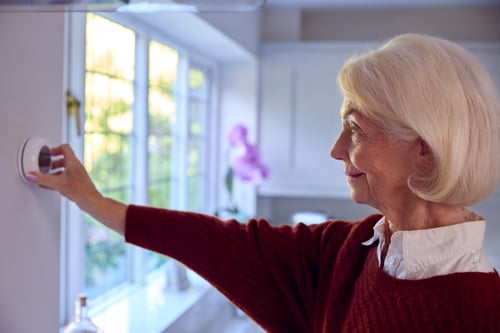
To provide automated safety routines that reduce fall risks for older adults while maintaining privacy and local-first reliability during power outages.
Severe winter storms, such as those occurring in late January 2026, expose high-risk vulnerabilities for older adults aging in place. When power lines fail, the resulting darkness significantly increases the probability of falls in familiar environments. According to CDC data on older adult falls, environmental hazards and poor visibility are primary contributors to domestic injuries that compromise long-term independence.
Designing for this demographic requires a shift from “surveillance” to “awareness.” An engineered approach focuses on predictable lighting and localized logic, ensuring the home remains supportive even when external connectivity is severed. This aligns with the National Institute on Aging’s principles for aging in place, which prioritize safety through environmental modification.
Automated Night Path execution (motion sensors)
Fall prevention is most critical during nocturnal movements. A professionally designed “Night Path” scene utilizes strategically placed motion sensors to illuminate safety routes—hallways, stairs, and bathrooms—automatically.
- Sub-second Latency: Local-first execution ensures lights activate immediately, preventing residents from taking steps in the dark while waiting for a cloud signal.
- Lumen Management: Lighting is tuned to low-glare levels (10-15%) to provide sufficient edge definition without causing night blindness or disorientation.
- Redundant Triggers: Multiple sensor zones ensure that movement is captured regardless of the resident’s speed or path.
Privacy-first monitoring vs intrusive surveillance
While cameras are standard for exterior security, their presence in private living areas can increase stress and reduce the resident’s sense of autonomy. Engineering for privacy involves using non-imaging sensors to maintain situational awareness.
| Technology | Function | Privacy Impact |
|---|---|---|
| Contact Sensors | Confirms entries/exits or cabinet access | Zero (Non-imaging) |
| Occupancy Sensors | Tracks movement through high-traffic zones | Low (Anonymized data) |
| Video Doorbell | Verifies visitors at the perimeter | Medium (Exterior only) |
| Indoor Cameras | Continuous visual monitoring | High (Intrusive) |
Reliability and Cognitive Load
In a crisis, the cognitive load on older adults should be minimized. Systems that rely on multiple apps or complex voice commands often fail under the stress of a power outage. A resilient system, as defined by the NISTIR 8259A technical baseline, must maintain core management and safety functions locally.
Engineering for older adults means removing the need for manual intervention. When power is lost or restored, the home should automatically enter a “Safety Mode” that stabilizes lighting and critical sensors, rather than requiring the resident to troubleshoot device states or re-pair hardware.

Professional installers in Central Pennsylvania, such as https://nestology.pro/, focus on this “calm technology” approach. By integrating local-first controllers with battery-backed network infrastructure, they create an environment that manages its own safety routines. This ensures that the most critical safety scenes—lighting the way to a bathroom or alerting a caregiver to an unusual lack of movement—persist regardless of internet stability.
Transitioning from intrusive cameras to a sensor-driven safety layer is a significant engineering upgrade for aging-in-place. By mapping safety routes and establishing local-only response logic, families can ensure that their older members remain protected during severe weather without the overhead of constant surveillance.
Use smart home systems with emergency alerts, backup power, automated lighting, and remote monitoring. Ensure easy communication, weather notifications, and fall detection to keep older adults safe during severe weather disruptions.